Skip to content

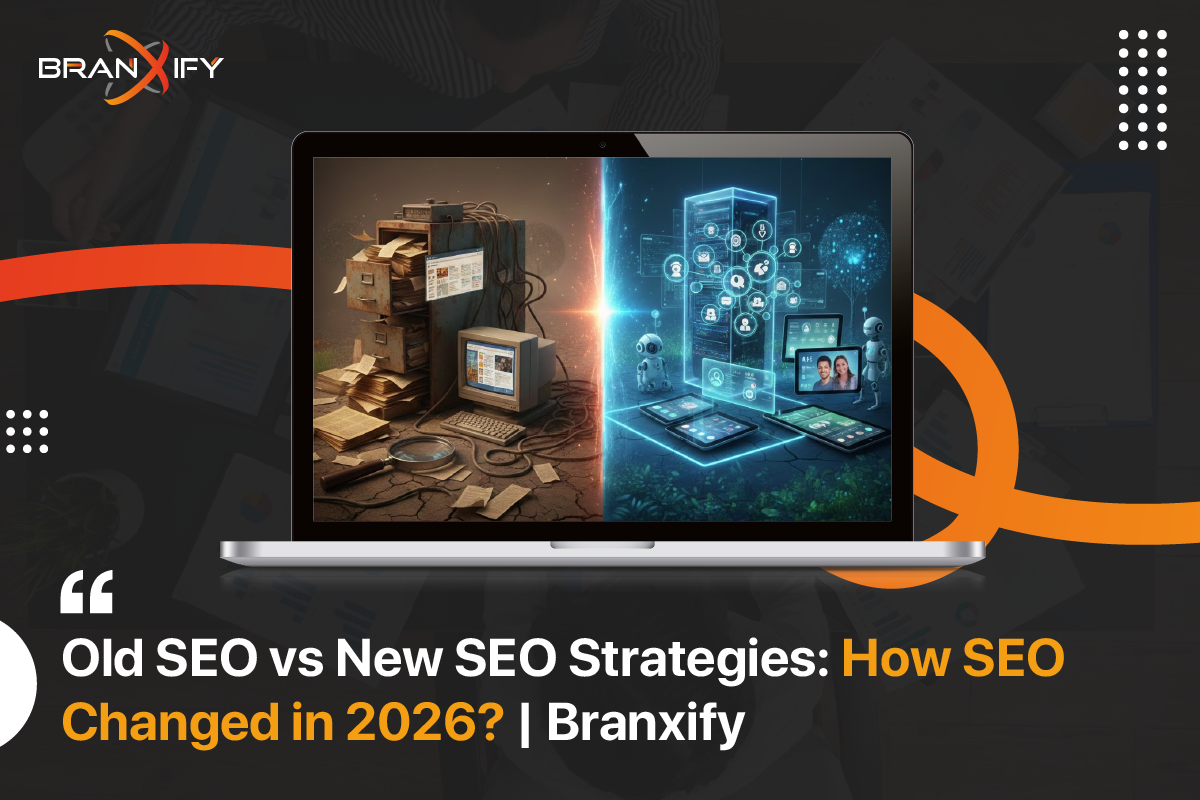
The SEO Has Evolved. Is your Brand keeping up?
Search engine optimization has evolved beyond expectations. And it doesn’t look the same as five years ago. Many factors have impacted global SEO strategy in a drastic manner, such as:
- Google’s constantly evolving algorithms.
- The user behavior ranking signals.
- User behavior-driven signals.
Most of the businesses are still applying old, rotten SEO strategies. They mainly focus on the keyword density, the surface-level blog content, backlink volume and long-term growth.
What Were the Old SEO Strategies?
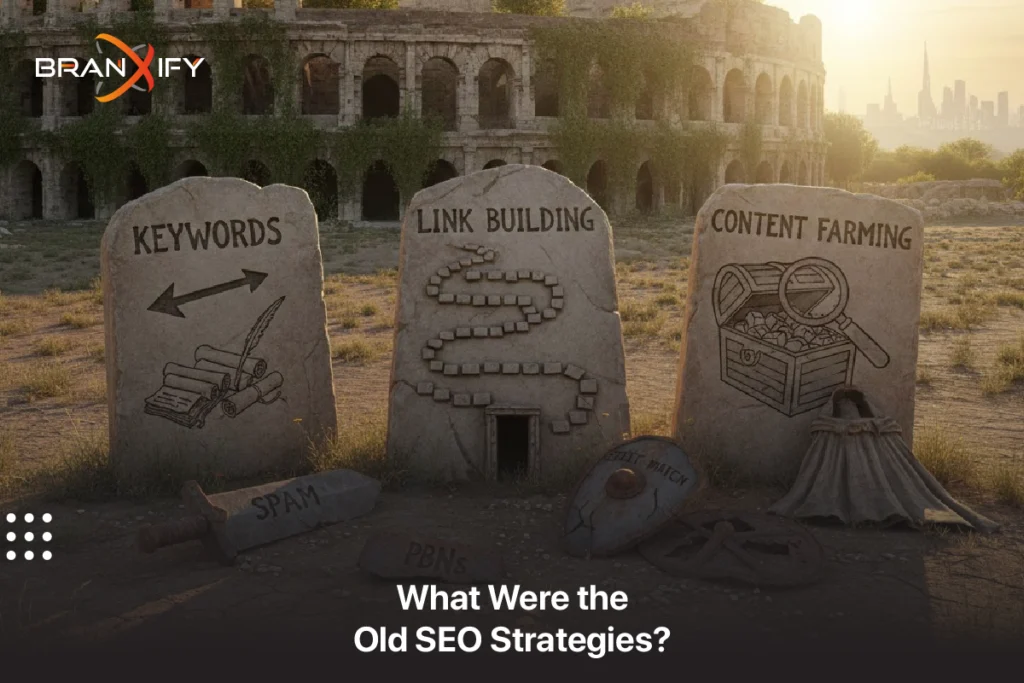
To understand it better, we need to look at where we started.
The global SEO strategy (happened between roughly 2010 and 2018) and it was focused on manipulating the search ranking instead of improving the search experience for users.
1. Keyword-Centric Optimization
The webpages are optimized with exact-matching keywords. The keywords appeared frequently in the headings, titles, and body text for a page to rank it better. The content doesn’t haveto sound unnatural.
2. Backlink Quantity Over Quality
The final goal of the global SEO strategy was to acquire backlinks from directories, low-quality links, guest posting, and any source available.
3. Thin, Volume-Based Content
Brands usually publish about 500 to 700-word blogs using keyword variations. The depth and expertise needed.
4. Basic Technical SEO Strategies
The meta titles, header tags and sitemaps were enough for the competitive rankings.
This kind of strategy worked when search engines worked on the signals instead of backlink counts. But when the algorithm became intelligent, the old playbook lost its effectiveness.
The Branxify Framework for B2B SEO Strategy in 2026
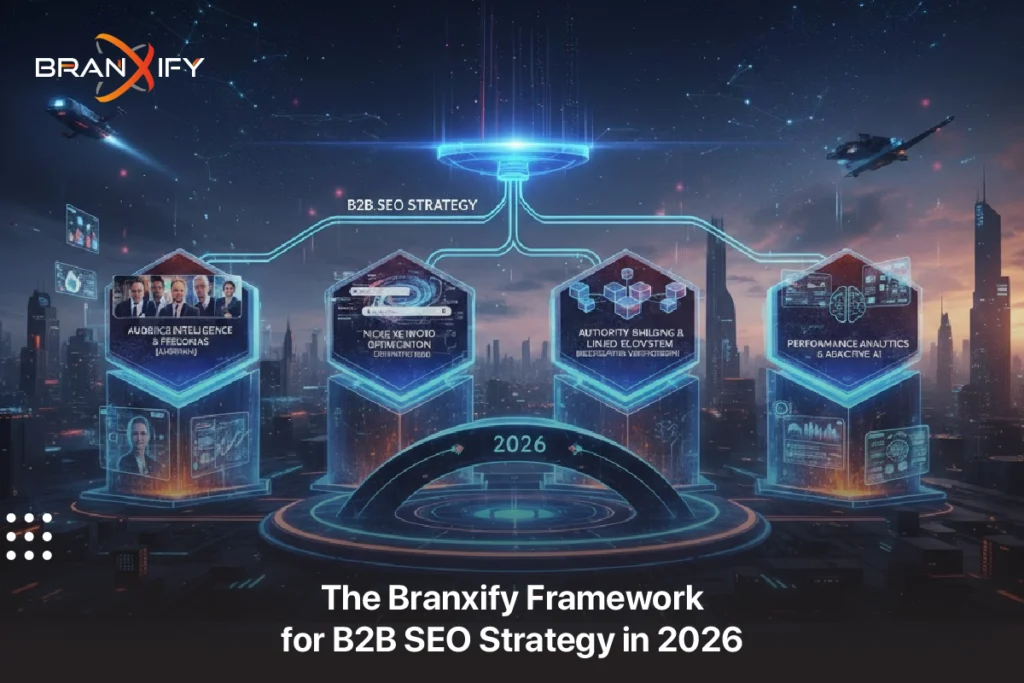
At Branxify we approach SEO as a long-term investment strategy instead of just a ranking. The modern SEO is built on five pillars.
How Does Branxify Weights In?
At Branxify we have seen such shifts happen across different industries. The SEO isn’t just about ranking anymore. It’s about being relevant, trusted, structured and believed across various search engines.
In this article I’m going to talk about:
- How does old SEO look?
- What do we mean by modern SEO in 2026?
- How Branxify approaches search strategies in modern times.
1. Intent-First Strategy
We don’t start our work with keywords, but instead with intent.
The search needs to fall into four categories of intent.
- The informational (caring about learning).
- The transactional (evaluating options).
- The local (based on locations).
- The comparative (where they evaluate options).
The B2B SEO strategy needs to map content in every stage of the buyer journey. So, instead of just targeting keywords, we need to design the ecosystem that addresses the decision path.
The search engines are now required to reward the pages instead of just satisfying the intent.
2. Building Authority instead of Content Volume
The publishing content is not just the answer, but these strategies can structure content. They implement the pillar and cluster models for establishing the authorities. This includes
- The comprehensive page.
- Supporting blog articles.
- Structured internal linking.
- Comprehensive cornerstone.
- Semantic keyword.
When a search engine understands that a brand has authority on the topic. The ranking becomes stable and sustainable. The authority can reduce the volatility
3. E-E-A-T Implementation
The EEAT stands for experience, expertise, authority, and trust. And these are the fundamentals of any ranking signals.
Modern SEO strategies should include:
- The modern SEO needs to have:
- The transparent business information.
- The clear author credentials.
- The accuracy and citations.
- The trust (testimonials, reviews, etc.).
- These search engines can evaluate who is behind the content and not just what it says.
Trust is not just an element but a critical SEO factor.

Get Visible in Search Results with Advanced SEO for 2026
Let your brand top the search engine with advanced SEO strategies in 2026
4. AI & Generative Engine Optimization (GEO)
The search behavior is now shifting towards AI summaries and various controversial search experiences.
The SEO optimization for 2026 means:
- The structured answers.
- Defining the entities.
- Clear FAQs.
- Concise and authoritative explanation.
- Anticipating follow-up questions.
5. Search Experience Optimization (SXO)
The user experience affects the search performance
The search engine can work as:
- Mobile responsiveness.
- Interaction.
- Page speed.
- Engagement timing
How Brands should Adapt SEO Strategies in 2026
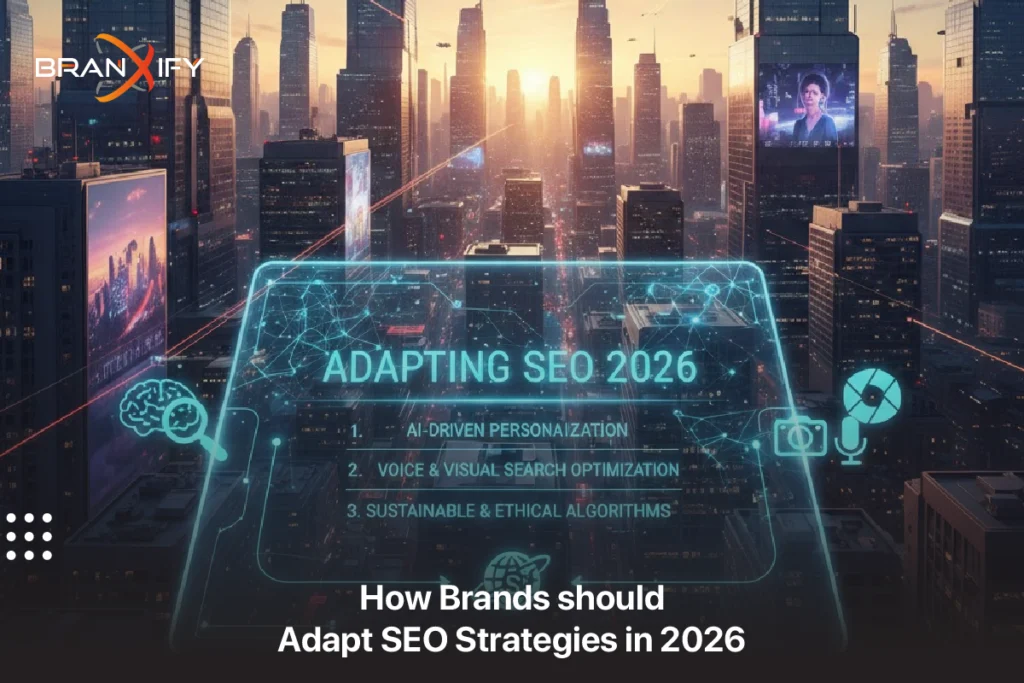
The transition of the outdated SEO can require various strategic resets. Here’s a simplified roadmap.
Auditing Content
You can identify the thin, redundant pages to consolidate them in stronger authority pieces.
Mapping Search Intent
You can align the content as comparative, informational and transactional.
One can also establish authority by covering topics instead of just publishing the posts.
Trust Signals
Adding author bio, testimonials and case studies for clear brand information.
Answers Engine Optimization (AEO)
Including FAQ’s, concise information and various definitions to appearin AI Result.
Enhancing User Experience
You can improve the speed, usability, and readability.
SEO in 2026 Requires Strategy, Not Shortcuts
The evolution of the search engine has transformed from just SEO to a technical checklist for comprehensive visibility. These brands can apply the outdated tactics and see such diminishing returns. They can also adapt and focus on authority, trust, user experience and the search intent.
At Branxify, we believe that SEO is not just about chasing rankings. but more like building the authority and performing a search across different search engines and AI platforms for a customer journey. The brands that are winning in 2026 are not the ones optimizing hard, but instead the ones optimizing smart.